Introduction
Facing a lawsuit questioning the safety and effectiveness of its child welfare system, a state agency sought an independent assessment of its practices. The allegations centered on whether children were being kept safe, placed appropriately, and supported through informed decision-making. Public Knowledge® assessed the agency’s child welfare practice and determined whether the agency had improved services and case practice to keep children safe and achieve permanency.

Without our assessment, the agency faced a potentially lengthy and expensive trial process that would have diverted precious resources from the child welfare system and its children and families. Redirecting these funds would have directly impacted the agency’s ability to continue engaging and supporting families through innovative and productive services.
Background
Our assessment occurred during an active lawsuit, adding complexity to the process. We assessed the measurable progress the agency made in keeping children safe, supporting families, and strengthening its workforce.
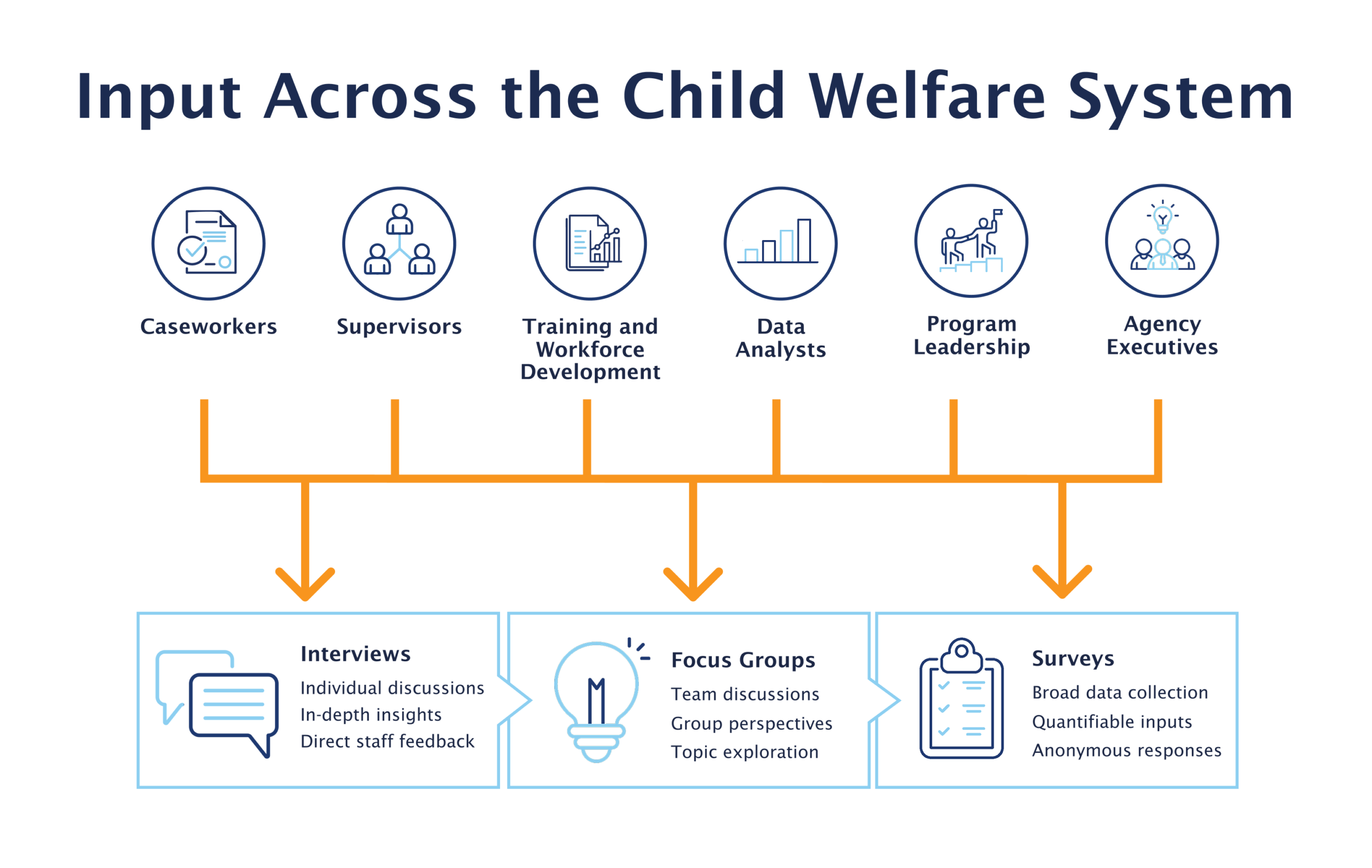
To fully understand the system, we gathered perspectives from a range of staff, including caseworkers, supervisors, training leaders, data analysts, and agency executives. We gathered this input using interviews, focus groups, and surveys. We also met with leadership to dive deeper into initiatives and programs supporting child welfare improvement.
The Problem
To address the lawsuit, the agency had to show concrete improvements in safety, placement, and family support through updates to its policies, procedures, and practices. Failure to demonstrate progress and improve services would result in a lengthy, expensive trial process, diverting resources from serving children and families.
The Solution
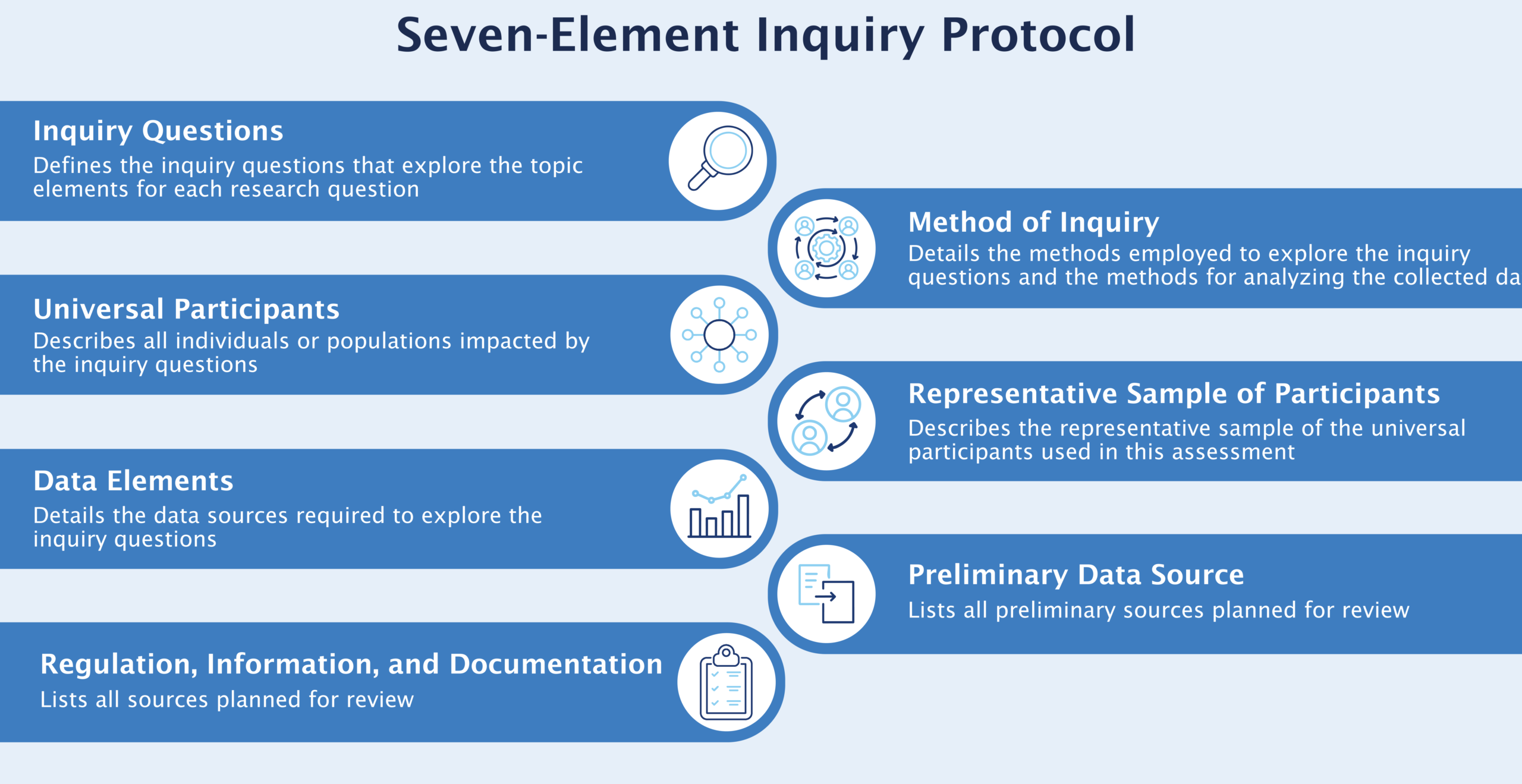
We applied our assessment methodology and seven-element inquiry protocol to demonstrate measurable progress under challenging legal constraints.
Our expertise in data analysis supported our development of quantitative findings. We used data from the state’s federal Child and Family Services Review and the state’s data initiatives infrastructure.
Our qualitative findings were the result of building relationships with the agency through interviews with leaders, focus groups with agency staff across the state, and an agency-wide survey. By combining quantitative and qualitative insights, we clearly demonstrated how the agency had strengthened its child welfare system and improved outcomes for children, families, and staff.
The Impact
Our work gave the agency the evidence it needed to settle the lawsuit without a lengthy or costly trial, freeing resources to focus on children and families.
The findings of our assessment clearly demonstrated that the agency had made progress in improving permanency planning, supporting the workforce, and adequately engaging with families. In addition to demonstrating their improvements, our assessment highlighted initiatives and programs the agency had established to comprehensively strengthen its child welfare system and improve outcomes for children and families.
The agency expressed gratitude for telling its story and for showing the hard work it put in over the past few years.
Conclusion
Our assessment illustrated the agency’s dedication to keeping children safe, maintaining connections with families, and supporting and retaining its workforce. We used the agency’s data to show the efforts it was making to support children and families across the child welfare system. Building trust and strong relationships allowed us to demonstrate progress and support the agency’s ongoing commitment to children and families.